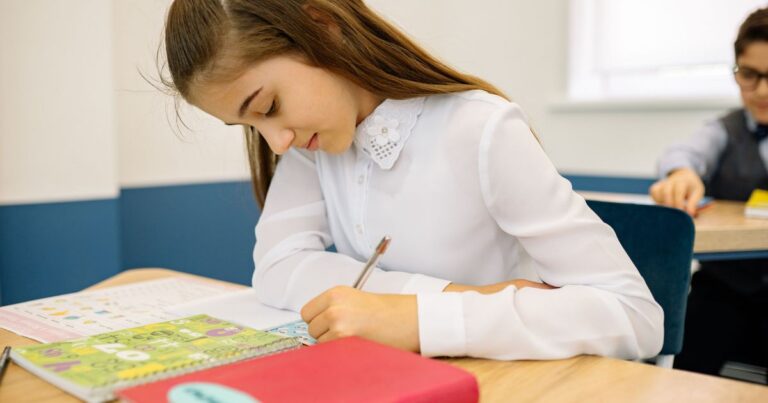



For most Aussie families and mums, the first day of Foundation, Prep, Kindy or Reception (depending on which state you’re in) is treated as a major milestone. You likely take a uniform photo on the front step, pack a large backpack, and drop your child off for a full day of structured lessons, new faces, and a new building, all before recess.
A growing number of Australian schools, parents and early childhood experts are questioning whether that all-in first day is actually the best way to start your child’s education. The alternative isn’t complicated. It’s simply a slower start with shorter days, smaller groups, and time to feel steady before the full timetable kicks in. And there’s a decent stack of evidence suggesting that a gentler start doesn’t hold kids back academically. If anything, it may set them up for success better.
What a Full Day of “Big School” Actually Asks of Your Kiddo
It’s easy to underestimate how much is packed into a single school day for your child who was in nappies just a few years ago. Following new routines, remembering a locker or a peg, sitting still through lessons, navigating a playground full of older kids, and reading social cues from new classmates happens all at once. None of that is about whether your child can count to twenty or write their name. It’s about their nervous systems that are still learning how to cope with a full day away from anything familiar.

Teachers who’ve spent years watching Foundation classes settle in will often say that readiness for school isn’t just an academic checklist. A kid can know their letters and numbers backwards and still find the emotional load of a long first day overwhelming. When that happens, the tears usually aren’t really about school itself. They’re about a nervous system trying to process too much, too fast.
Why Some Australian Schools Already Ease Kids In Gradually
The encouraging part is that some Australian primary schools have already worked this out. It’s increasingly common for Foundation and Prep students to start with a staggered entry, sometimes arriving in small groups across a morning rather than all piling in with the rest of the school at once.
Some schools run shortened days for the first week or two, finishing before lunch so little ones aren’t asked to sustain a full six hours straight out of the gate. Others hold one-on-one or small-group transition sessions with the teacher in the weeks before term starts, so a child’s first proper introduction to their classroom isn’t also their first day of full-time school.
None of this is about lowering the bar, but more about sequencing things sensibly. A child who’s already met their teacher, found the toilets and worked out where the bag hooks are has far less to figure out on day one. That frees up mental and emotional bandwidth for the actual point of helping your child learn at school while enjoying it.
If your kiddo’s school hasn’t mentioned a transition or orientation program, it may be worth asking. Most schools run something, even informally, and a five-minute conversation with their Foundation teacher can tell you a lot about what the first days will actually look like.
What the Data Says About Social-Emotional Readiness
In plain terms, more Australian children are starting school without the social and emotional groundwork schools have traditionally assumed they’ll arrive with. That’s not a reason to panic, and it’s certainly not a reflection on your child or role as a mum. But it is a strong argument for treating the social and emotional side of a school transition as seriously as the academic one, rather than assuming kids will simply catch up once they’re in the classroom.
This isn’t just a hunch backed by anecdotes. The Australian Early Development Census, a national check-in on how children are tracking by the time they start school, has been tracking five domains of early development since 2009. These include physical health, social competence, emotional maturity, language and cognitive skills, and communication. The most recent results, from 2024, show developmental vulnerability rising across every single domain since 2021, with social competence and emotional maturity showing the sharpest increases on record.

The two aren’t in competition either. A child who feels safe and settled is a child with the mental space to actually absorb what’s being taught. Rushing past the emotional groundwork to get to the “real” learning tends to backfire, because an anxious, overwhelmed child isn’t in much of a position to learn anything at all.
What’s Doing More Work Than You’d Think
One of the simplest tools in a slower transition is something kids already do naturally. Unstructured, low-stakes play with other children gives your kiddo a way to build friendships and practise social skills without all the pressure of formal instruction. It’s also, as it turns out, doing something at a neurological level. Early childhood is a period of enormous brain growth, and play has a measurable role in helping children process stress and build the emotional regulation skills they’ll lean on for the rest of school.
That’s part of why orientation days that lean on play-based activities, rather than sitting kids down for formal lessons straight away, tend to work so well. A child who’s played with blocks or toys next to a future classmate has already done more bonding than a week of assigned seating ever could.
How to Support a Gentler Start at Home
You don’t have to wait for the school to make the first weeks easier. Early childhood services such as StartingBlocks point out that being “school-ready” has as much to do with emotional maturity and independence as it does with academics. A few things genuinely help in those first few weeks, such as:
- Talking about school in a low-key, matter-of-fact way in the lead-up. Excitement is great, but too much hype can make the whole thing feel like a bigger deal than it needs to be.
- Trying to arrange a playdate with a future classmate before term starts, even one. Walking into a classroom with a single familiar face can change everything for a nervous child.
- Keeping goodbyes short and confident. Lingering, however well-intention-ed, tends to signal to your child that there’s something to worry about.
- Protecting downtime in the first few weeks. Even a “successful” day at school can be very exhausting for your kid’s brain and body, so it’s worth easing off extracurricular activities until the new routine feels normal.
- Staying in touch with the teacher. A quick chat at pick-up or a short email can tell you whether your kiddo is settling in the way it looks from the outside.
A Gentler Start, But A Stronger Foundation
None of this is about keeping your kiddies swaddled or delaying the inevitable. School is coming, ready or not, and that’s exactly the point. A slower, more supported start doesn’t hold your child back from the curriculum. It gives them the emotional footing to actually take it in.
For your young one, feeling safe and known in a new environment isn’t a nice-to-have before the real learning starts. It is part of real learning, and it’s arguably the most important lesson of that first term.