


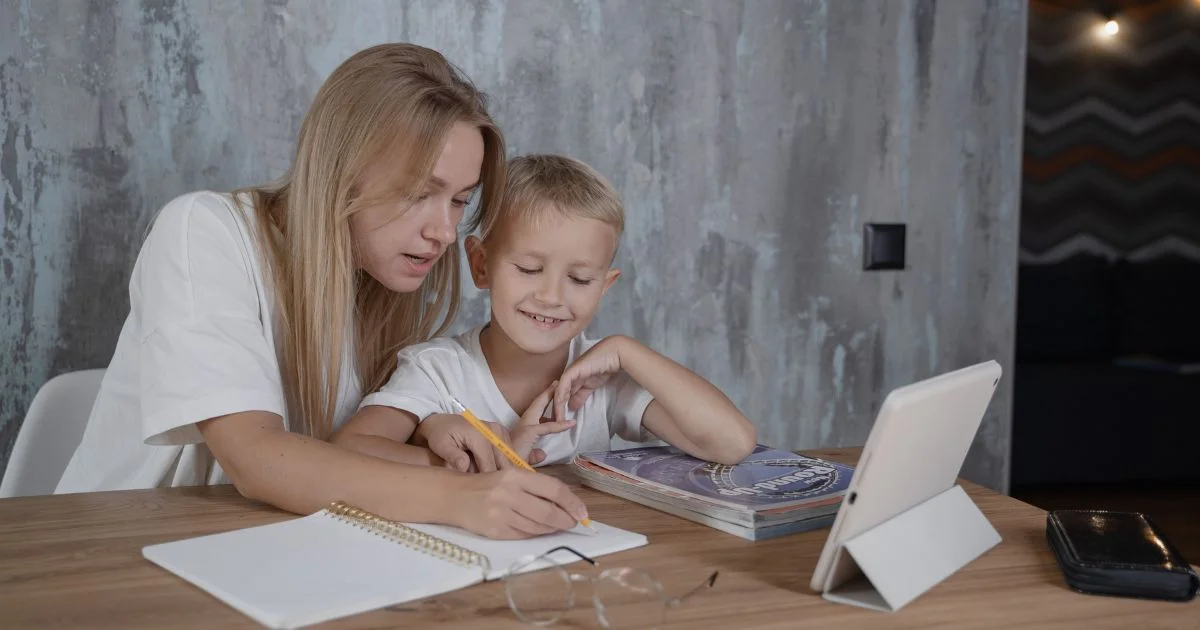
There is a particular kind of pressure that comes with being the only adult in the house when your teenager is doing Year 12.
You are managing the household, the finances, the emotional load and your own schedule. And then there is this other enormous thing happening at the kitchen table every night, full of subjects you may not have studied in decades, a grading system that feels opaque, and a teenager who oscillates between needing you desperately and wanting you to disappear entirely.
Nobody talks enough about how hard this is for single parents. The advice out there tends to assume two adults, a calm household, and someone who can sit down and help with Maths Methods after dinner while the other one cooks. That is not most families. And it is definitely not most single mum families.
So this is for you.
You Do Not Need to Understand the Content
This is the first thing to let go of. Your job is not to know what a context statement is, or how to calculate a derivative, or what the difference is between analytical and creative writing in the VCE context.
Your job is to create the conditions in which your teenager can do the work. That is a completely different thing, and it is something you are already doing.
Creating the conditions means:
A consistent place to study. It does not have to be a dedicated desk. It just has to be somewhere that signals to the brain that it is time to focus. The kitchen table is fine. The bedroom is fine. What matters is that it is the same place, at roughly the same time, with the phone somewhere else.
Regular meals that do not require your teenager to think about food. Year 12 students are notoriously bad at feeding themselves when they are stressed. One less decision is genuinely helpful.
A home that is reasonably calm during study blocks. This is hard in a busy household. It does not need to be silent, but it does need to be predictable.
The Emotional Support Is the Main Thing
Your teenager will not always say this. In fact they will often say the opposite. But the research on what helps students through high-stakes assessment periods consistently points to the same thing: feeling supported at home matters more than any specific academic intervention.
What that looks like in practice is less dramatic than it sounds. It is checking in without interrogating. It is noticing when they seem flat without making it a big conversation. It is occasionally sitting near them while they work, not hovering, just being present.
Single mums tend to be exceptionally good at this kind of attentive, non-intrusive support. It is something that comes from years of reading a situation quickly and responding to what is actually needed rather than what should be needed.
Trust that instinct.

When You Can Tell Something Is Wrong
There is a difference between normal Year 12 stress and something more serious. Normal stress looks like irritability, tiredness, the occasional meltdown about a piece of work that did not go well. It is loud and temporary.
Something more serious looks like withdrawal, persistent low mood, losing interest in things they used to care about, or consistently avoiding the work rather than engaging with it badly.
If you are seeing the second set of signs, it is worth having a direct conversation. Not about Year 12, not about marks, but about how they are actually going. The question, asked and without an agenda, is often enough to open something up.
The Practical Question of Academic Support
Single-income households have to make more deliberate decisions about where money goes. Tutoring can feel like a luxury, and it is honest to say that it is an additional cost.
At the same time, the window for Year 11 and 12 is short and specific. A student who is genuinely lost in one or two subjects can fall behind in ways that compound quickly, and catching up becomes harder as the year progresses.
If academic support is something you are considering, small-group Year 12 tutoring tends to be more cost-effective than private one-on-one sessions while still giving students the individual attention that a full classroom cannot provide. It also takes the academic pressure off the home environment, which matters a lot in a household where you are already carrying everything else.
This is not a decision that needs to be made at the start of the year. It is worth watching how the first term goes and making the call based on what you actually see.
Giving Yourself Permission
There is a version of this year where you hold yourself to an impossible standard. Where you feel guilty for not being able to help with the content, guilty for being tired, guilty for the nights when dinner is toast and you have nothing left to give.
That version is not useful to you or your teenager.
The more useful version recognises that you are doing something genuinely hard. You are holding a household together while also trying to emotionally support a young person through one of the most pressured periods of their life. The fact that you are thinking about how to do this better is already evidence that you are doing it well.
Year 12 ends. The marks come out. Life continues in one form or another. What your teenager will carry forward from this year is not just whatever score they receive. It is the knowledge of what it felt like to have someone in their corner.
You are that person. That is the thing that matters most.